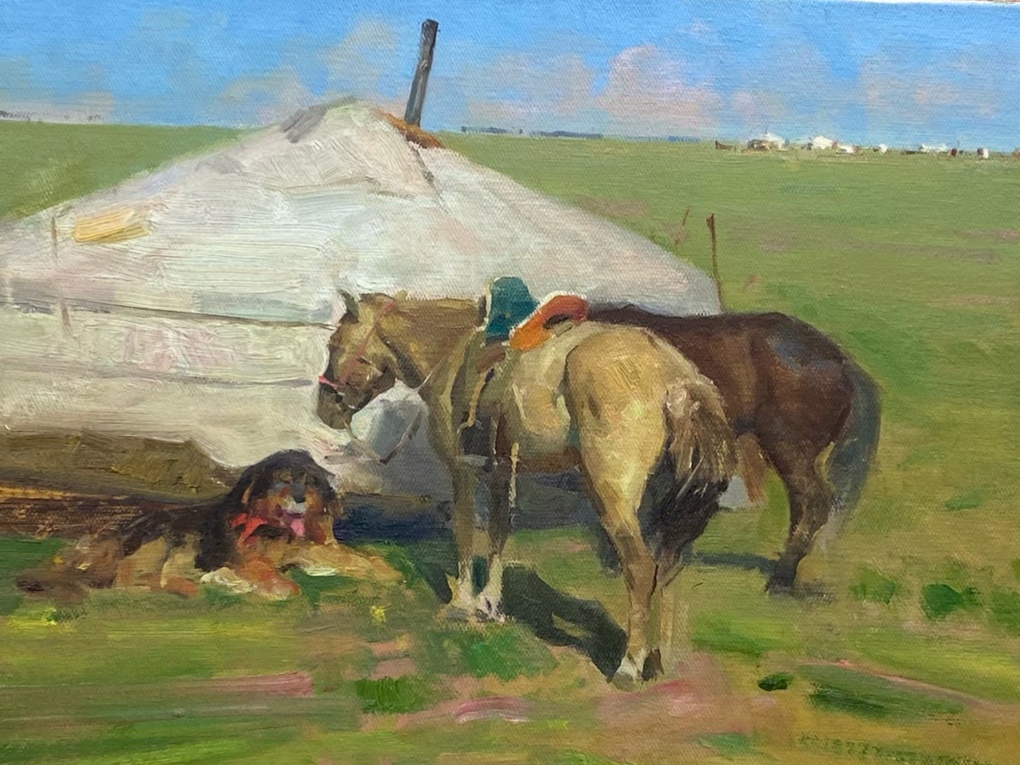
Rest Stop by the Yurt
Munkh BinderyaThe composition is built on a combination of natural elements and everyday objects of nomads. The central object is a yurt — the traditional dwelling of nomads, symbolising the connection between humans and nature, as well as nomadic culture. The composition is asymmetrical: the yurt is positioned on the left, while the main group of animals (a horse and a dog) is shifted towards the foreground. This creates a sense of spontaneity, of a “captured moment” from everyday life. The horizontal line of the horizon emphasises the vastness of the steppe landscape, while diagonal lines (the horse’s back, the dog’s posture) add dynamism. This scene embodies the idyll of nomadic life: the harmony between humans, animals and nature. The horse is a key companion of the nomad, a symbol of freedom and strength. The dog fulfills a protective role, highlighting the coziness of home. The yurt represents mobility and adaptation to the harsh conditions of the steppe. The brushstrokes are loose and impressionistic, with a clear texture. The artist does not aim for photorealism, but rather conveys the general mood of the scene. Glazes (transparent layers of paint) create a sense of the slight shimmer of air typical of the steppe climate. The painting evokes a feeling of tranquillity and gentle nostalgia. The vastness of the steppe, the calmness of the animals, and the stillness of the yurt create a sense of the eternal cycle of life and harmony with nature. Warm hues and soft light emphasise the benevolence and sense of security in this world.
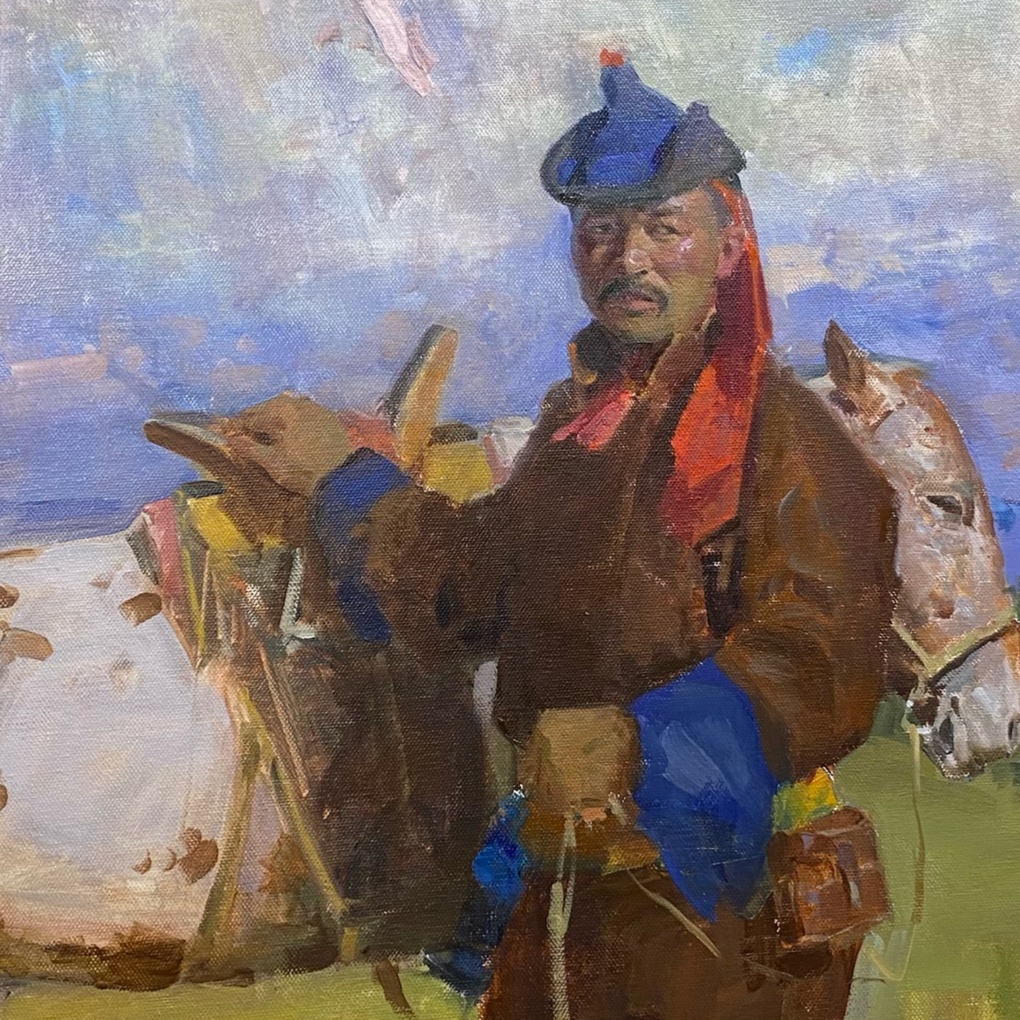
Rider in a Blue Cap
Munkh BinderyaThis is a portrait of the ethnographic genre. The central figure is a man in traditional Buryat clothing, depicted against the backdrop of a steppe landscape with a horse. The composition is structured with an emphasis on the human figure, which occupies the foreground and draws the viewer’s primary attention. The horse, positioned slightly behind, complements the image, underscoring the hero’s connection to nomadic culture. The painting is executed in a warm yet restrained colour scheme.
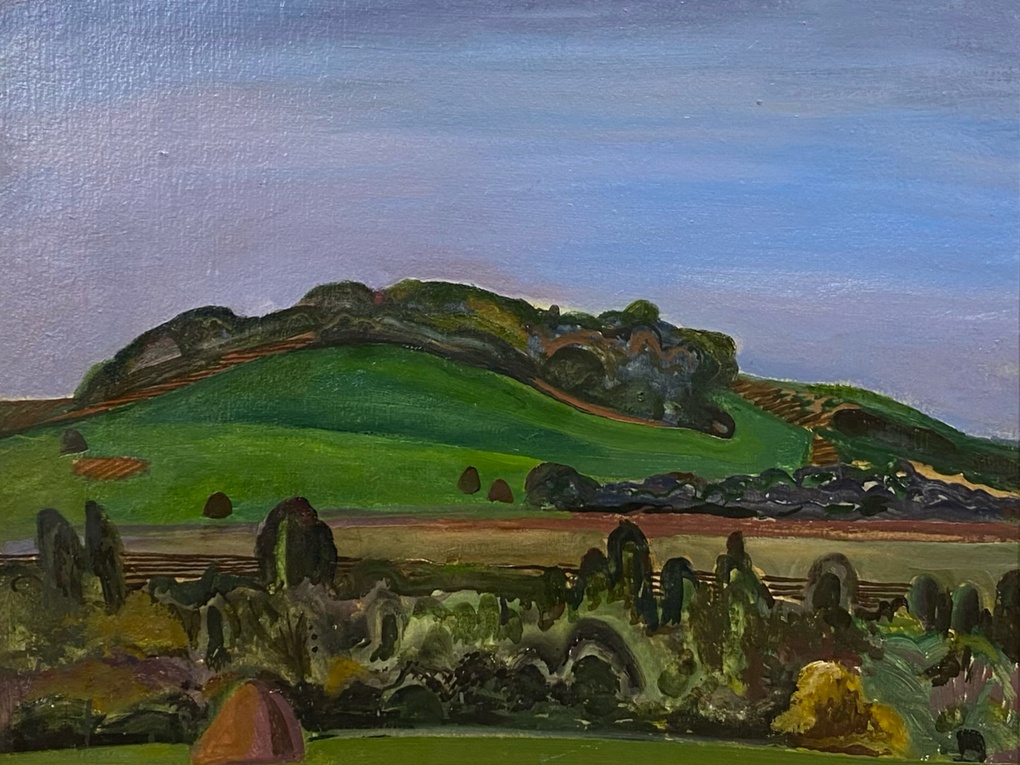
Green Hills at Dusk
Alexander PetrovThe painting depicts a serene rural landscape. At the centre of the composition is a green hill covered with grass, featuring an uneven summit adorned with bushes and trees. On the slopes of the hill, one can see patches of land in various shades — ploughed or sown fields. In the foreground, there is a dense strip of shrubs and trees, rendered with rich dark‑green, brown, and yellowish brushstrokes. This strip creates a sense of depth and separates the viewer from the main landscape. The sky occupies the upper part of the painting and is executed in soft blue and lilac tones, without distinct clouds — it evokes a calm, slightly cool atmosphere. The colour palette is predominantly green, with accents of brown, yellow, and purple, which emphasise the naturalness and vibrancy of the landscape. The overall mood of the work is peaceful, with an emphasis on the harmony of nature and the simplicity of the rural scenery.
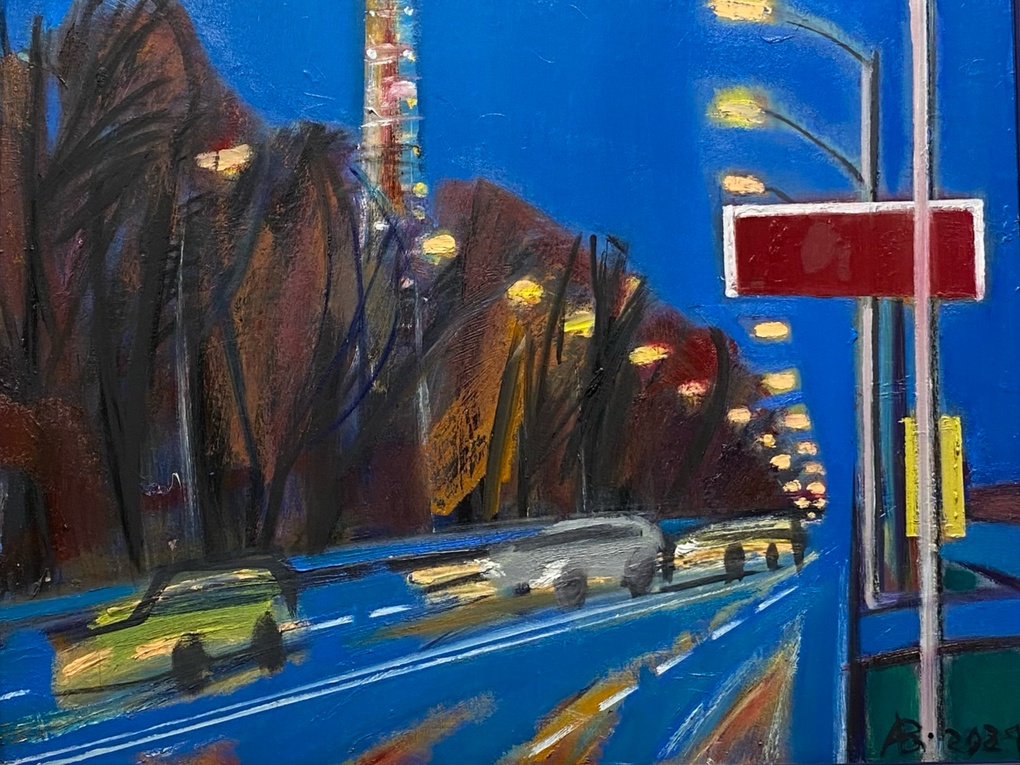
Night Avenue
Andrei VetrogonskyThis urban scene by Andrey Vetrogoński captures less a specific street than a condition of modern life: cold blue atmosphere, a chain of streetlights, and the pulse of transit turn the avenue into a metaphor of time and passage. The composition is driven by a strong vanishing perspective and the repeated cadence of luminous marks—an almost musical score in which each lamp sets the tempo, while the dark, wind-tossed trees act as theatrical wings. Cars and pedestrians are intentionally reduced to signs, heightening both the anonymity of the city and its seductive energy. A tight dialogue between saturated ultramarine and warm artificial light, reinforced by assertive brushwork and tactile paint handling, produces a sense of speed and immediacy. The blunt red road sign introduces a note of interruption—“stop” as a psychological counterpoint within an otherwise continuous flow. Market-wise, the work appeals to collectors of late modern urban lyricism and confident nocturne painting, where atmosphere and structure align with uncommon clarity.
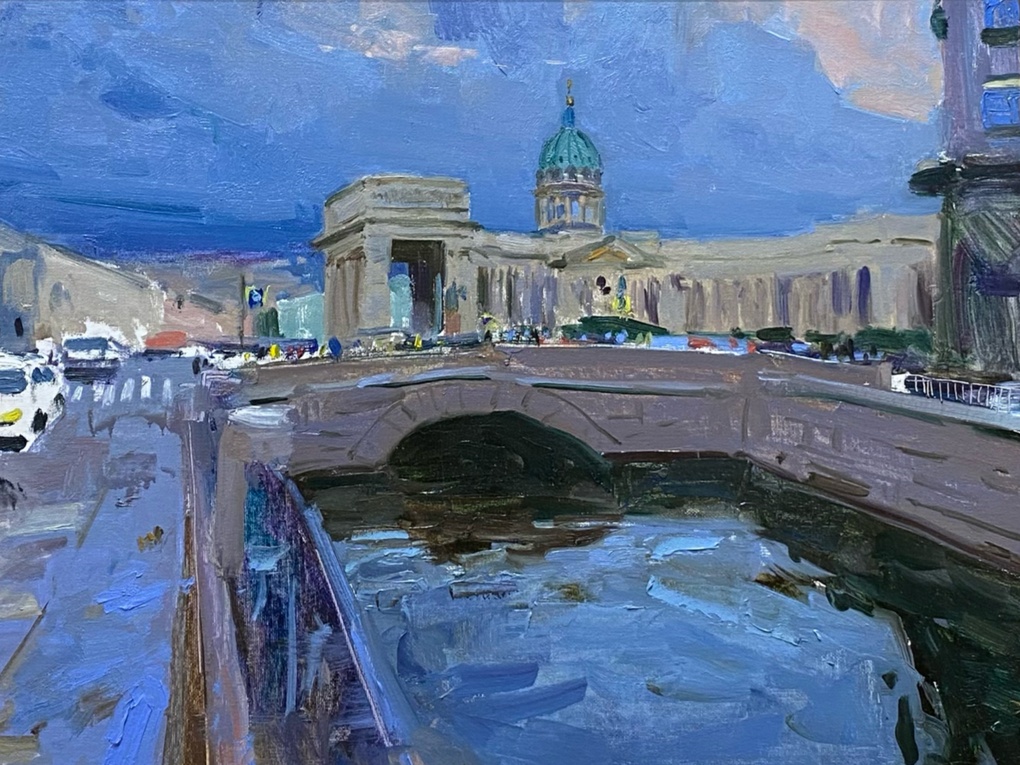
Evening by the Kazan Cathedral
Munkh BinderyaThis painting depicts one of St. Petersburg's iconic architectural ensembles—a view of the Kazan Cathedral from the bridge over the Griboyedov Canal (formerly the Catherine Canal). The work is executed in a painterly style with pronounced brushstrokes, lending the scene a dynamic and atmospheric feel. 1. Composition The composition is built on the contrast between monumental architecture and the vibrant urban environment. The artist masterfully conveyed the key architectural features of the Kazan Cathedral: the colonnade, domes, and cornices. The contrast between the static architecture and the dynamism of urban life emphasizes the vibrant essence of the city. Reflections in the water add a poetic touch, creating a sense of duality in reality. The choice of perspective (from the bridge, at an angle to the cathedral) allows for multiple planes to be captured and the scale of the ensemble to be conveyed. The painting evokes a feeling of both grandeur and a touch of melancholy: The grandeur is due to the monumentality of the cathedral and the strict symmetry of the colonnade. Melancholy—due to the cool color palette, overcast sky, and reflections in the water, creating a feeling of coolness and pensiveness. A note of everyday life—in the hints of urban life, adding realism and a human touch to the image of the city.
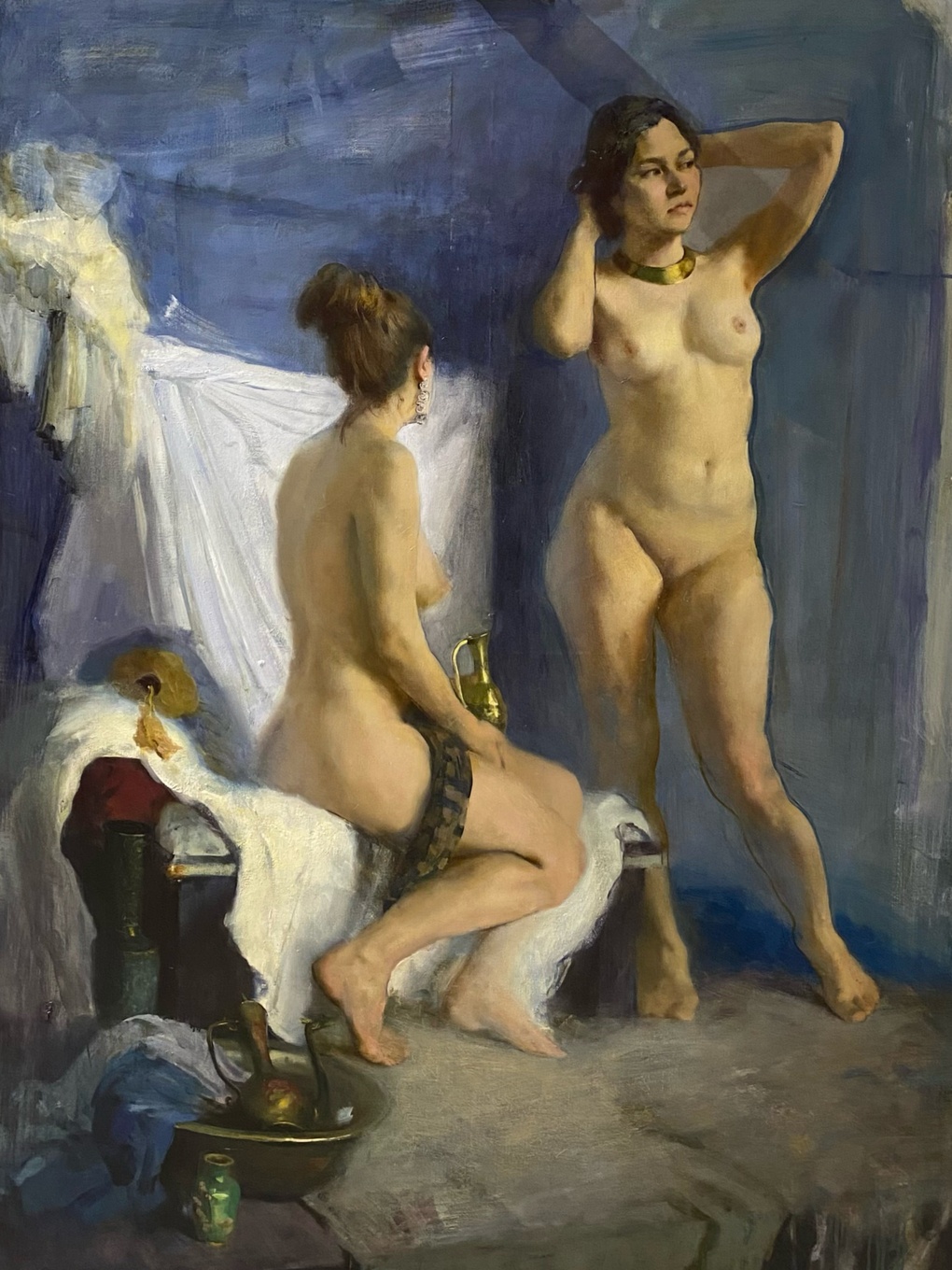
In the Studio: Two Nudes
Mikhail SolovyovThis is an intimate genre scene, constructed according to the principles of the classical “atelier” genre. Two nude figures appear frozen in a moment of quiet dialogue: one is shown in a half‑turn, absorbed in introspection, while the other stands upright and confidently, as if asserting the harmony of the body. The warm tones of the skin glow softly against the deep blue background — this contrast does not merely divide the space, but also creates an atmosphere of seclusion, where the body becomes an object not only of gaze, but also of self‑awareness. Every detail here is a sign: the white cloth and sheet serve as a hint at theatricality and the purity of perception; the brass vessels and basin allude to a ritual, evoking both ritual purity and everyday life at the same time. The painting style is lively and immediate: one can see glazes (or retouches), smooth transitions in the modelling, and light that confidently shapes the forms. The canvas breathes with the energy of the studio — without embellishments, without salon‑like sweetness.
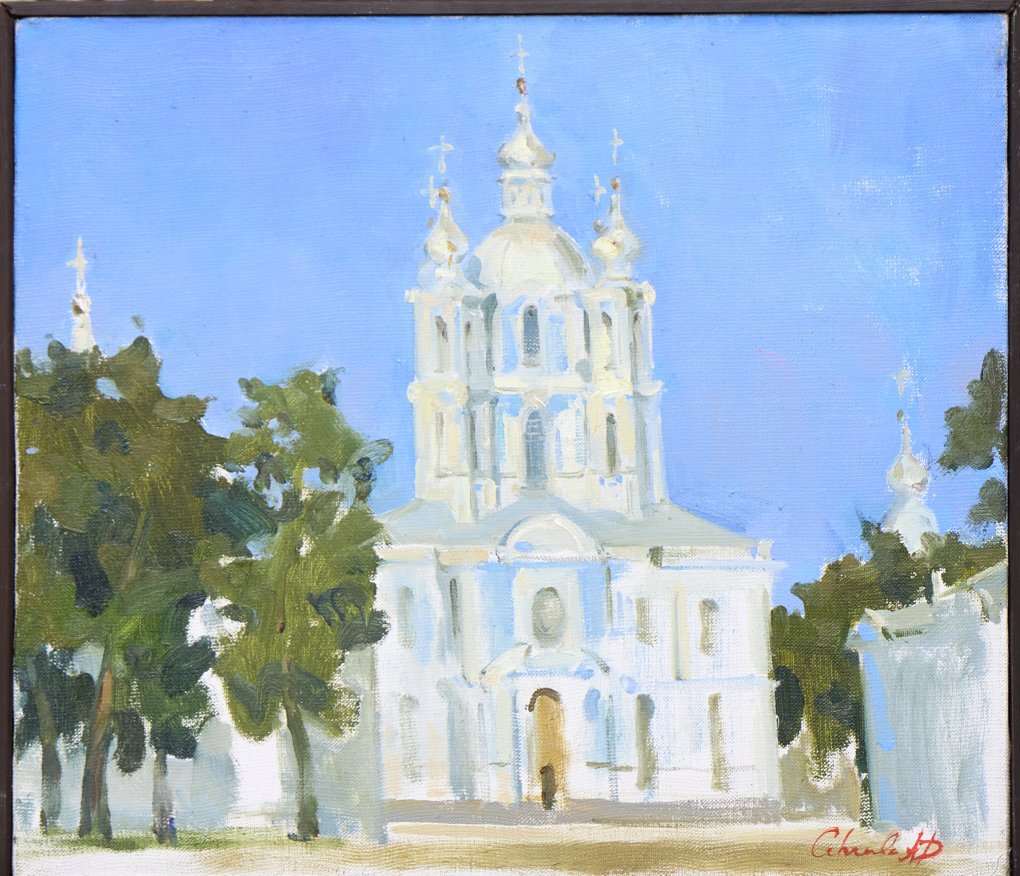
White Church
Anna SergeyevaIn this painting, Anna Sergeeva captures less a specific locale than the archetype of an Orthodox church as a symbol of steadiness and inner refuge. The luminous white structure—organized in a lucid symmetry of domes and crosses—reads as a metaphor of purification and calm, while the surrounding greenery and open blue sky amplify the sense of lifted, breathable space. The composition is deliberately frontal, almost icon-like in its directness, yet it resists literalism: forms soften into painterly touches and light becomes the true subject. Confident, broad brushwork and the visible weave of the canvas keep the surface active; tonal relationships are built through subtle variations of white and cool reflected color. The result is a contemporary architectural landscape with strong display presence: it holds from across a room, remains fresh up close, and delivers the plein-air immediacy collectors seek. As a one-off painted work with a clear motif and serene mood, it sits comfortably within modern interiors and maintains solid market appeal.
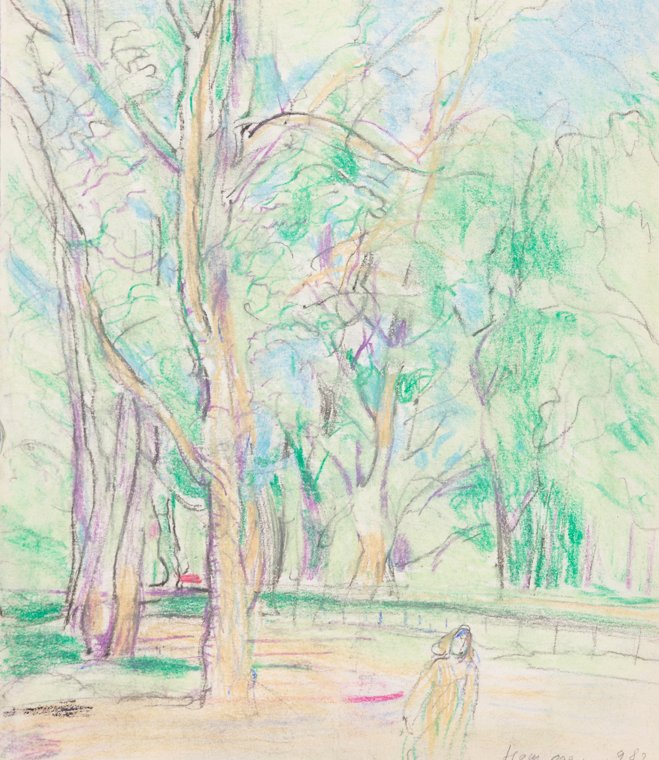
Spring Park
Valentina PetrovaThis delicate pastel (or colored-pencil) study captures less a specific park vista than a seasonal atmosphere—the moment when air, light, and new foliage begin to return. Tall trunks, articulated with economical line, establish a measured vertical cadence, while translucent green and blue veils of canopy suggest flickering spring luminosity. The small figure at lower right is deliberately understated, nearly dissolved into the ground; it functions as a scale marker and a quiet witness rather than a narrative protagonist. The sheet’s most eloquent device is its reliance on the paper’s whiteness, allowing space to “breathe” between winter and summer. Technique rests on soft, layered hatching and restrained chromatic accents, avoiding heavy shadow in favor of optical vibration—an approach aligned with plein-air draftsmanship and a modernist sensitivity to fleeting perception. Collector appeal lies in its intimacy and sincerity: a finished work that also reads as a first notation of seeing, well suited to cabinet collections of works on paper and thematic groupings around landscape and the poetic everyday.
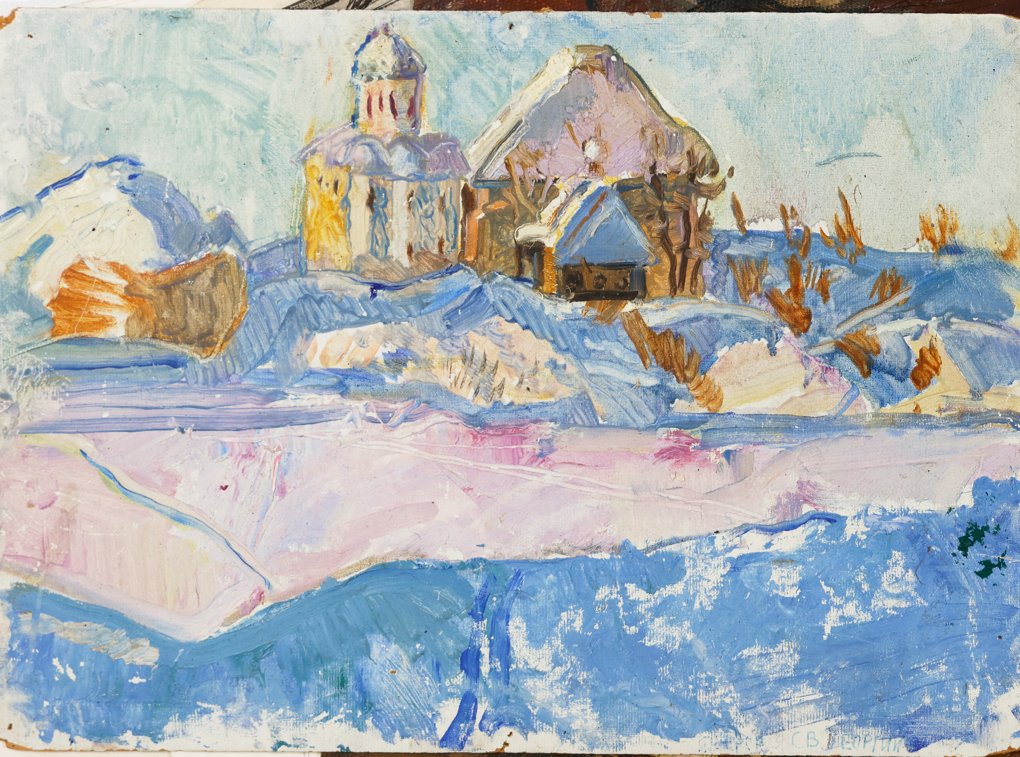
Winter Landscape with Church and Cottages
Alexander PetrovA concise winter motif: on a raised horizon line, the silhouettes of a rural domed church and a few cottages sink into snowdrifts. The composition is built from broad, almost impasto fields of snow set against brisk, broken strokes that register less a specific locale than the lived sensation of weather and shifting light. A cool blue register dominates, punctuated by restrained ochre notes in trees and walls—small signals of habitation within an otherwise hushed expanse. Snow functions here as metaphor as much as subject: the pale planes read like a field of memory and suspended time, while the church stands as a stabilizing emblem of communal continuity. For collectors, the work’s appeal lies in its tactile paint handling and confident color architecture—an intimate modernist landscape that retains the authenticity of an on-the-spot étude, avoiding decorative prettiness in favor of direct, market-scarce sincerity of gesture.
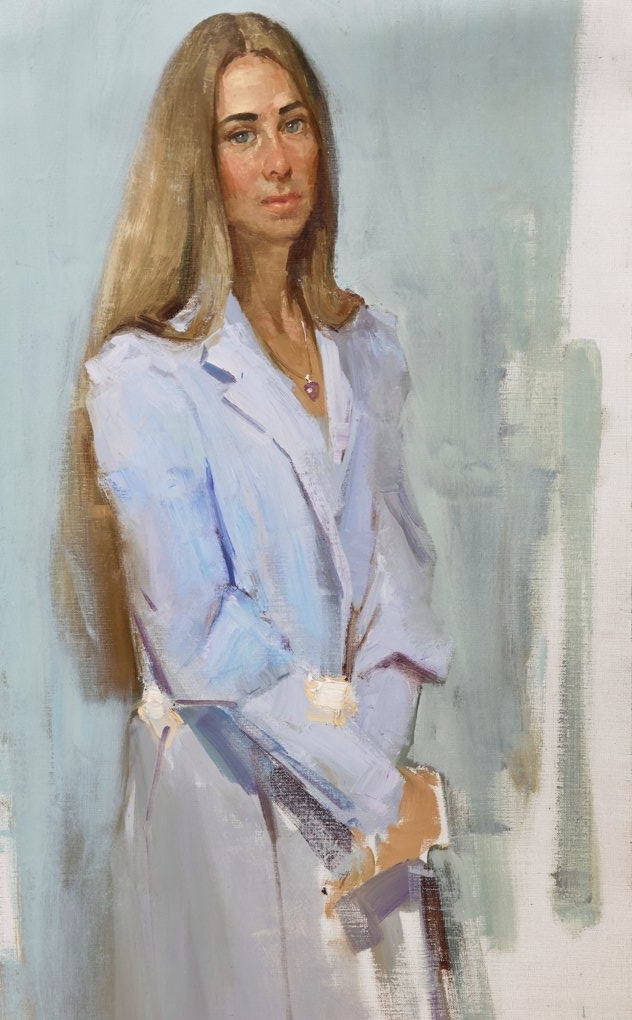
Portrait of a Woman in a Blue Dress
Unknown ArtistWe are looking at a portrait of a young girl with long blonde hair, wearing a blue dress. The model is looking directly at the viewer: her gaze conveys quiet confidence rather than a display of emotion. The key element is the blue dress, painted with broad brushstrokes — it can be interpreted as a symbol of purity and personal freedom. The background is deliberately blurred and rendered in shades of blue‑gray; it creates a sense of distance rather than depicting a specific location. Thanks to this approach, the image feels universal and can easily fit into any interior. The combination of warm skin tones and cooler tones in the fabric brings the portrait to life. This is a rare work in terms of its mood — a portrait without a narrative, one that invites prolonged contemplation.
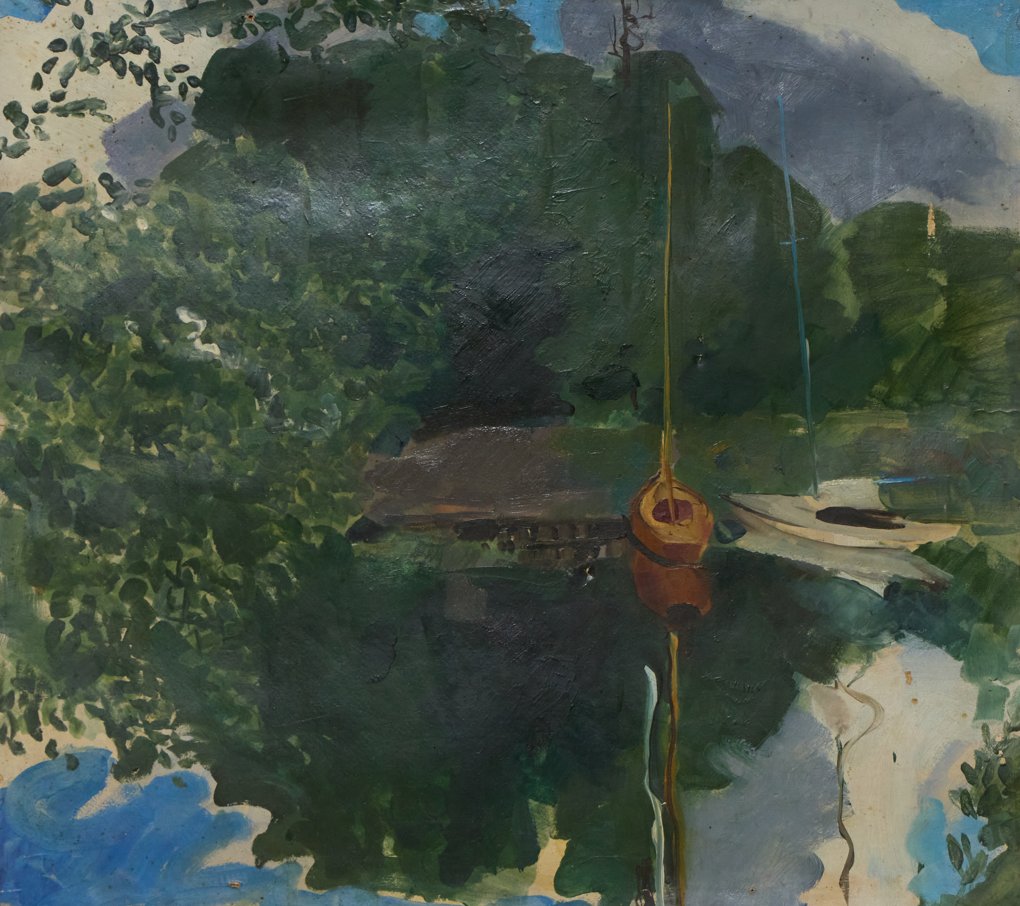
Evening
Viktor GovorkovVictor Govorkov's painting, created in 1974, is an expressive example of Soviet realism with elements of modernism. The artist's attention to detail and use of color are evident in the depiction of a serene river scene with a boat. The dominant green hues of the trees and their reflection in the water create an atmosphere of tranquility and harmony with nature. The boat, positioned centrally, adds a touch of life and movement. Govorkov skillfully uses light contrasts to convey depth and texture, making the composition layered and captivating. The painting is interesting not only as a work of art but also as a historical testament of its era.
All 11 paintings loaded