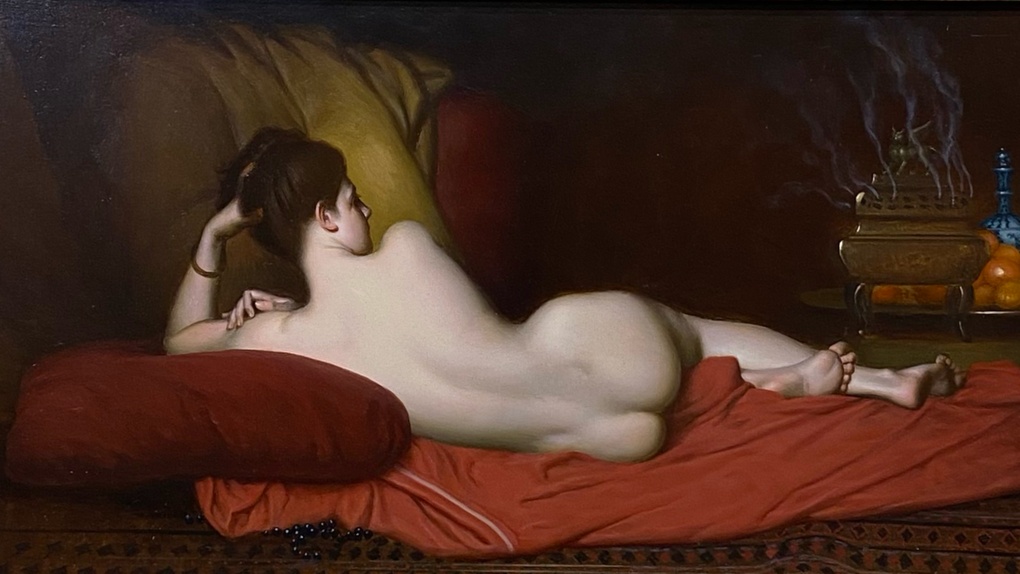
Reclining Nude with Incense
The artwork portrays a reclining nude figure. The compositional focus is deliberately shifted: the figure is depicted with her back to the viewer, thereby emphasizing the plastic выразительность of the forms rather than individual portraiture. The viewer’s attention is drawn to the graceful rhythm of the lines — the contours of the shoulder, waist, and hip create a harmonious visual composition. The color palette enhances the emotional resonance of the piece. The warm, приглушённая color scheme with velvety transitions between light and shadow creates an atmosphere of secluded intimacy. This atmosphere generates a meditative quality rather than an erotic one, inviting the viewer to engage in contemplation. The symbolic dimension of the work is revealed through carefully selected elements: the red drapery and pillows serve as symbols of sensuality and the tangible presence of matter, emphasizing the tactile quality of the image and highlighting the textures. The incense burner with its rising smoke introduces a motif of transience and memory, linking the physical with the ritualistic, evoking a sense of the temporal nature of the material world and the eternal quality of the symbolic. From a collective standpoint, the work holds significant appeal. The fusion of a timeless classical theme with an evocative oriental ambiance ensures its high decorative value in any interior setting. The composition and color palette seamlessly integrate into both contemporary and traditional environments, while the depth of symbolic meaning adds conceptual durability, independent of shifting artistic trends.
Alexei Kreydun
Alexei Kreydun was born in 1962. He graduated from the Lugansk Art School in 1982. In 1996 he graduated from the Repin Institute, painting faculty, restoration department. He currently teaches at the Academy of Arts and Industry named after Baron Stieglitz. A participant in city, all-union, all-Russian, and international exhibitions. Particularly known for his work in portraiture, including portraits of metropolitans. Works are held in private collections in Russia, Ukraine, Japan, Germany, the USA, Belgium, Israel, and France, and in the Kazan Art Museum and the Alexander Nevsky Lavra in St. Petersburg.